

NEWS / TOPICSニュース&トピックス
- HOME
- NEWS / TOPICS
- NEWS
- Report at Institute of Biological Sciences, Ålesund, Norwegian University of Science and Technology (NTNU). (IGARASHI, Course of Applied Marine Environmental Studies)
Report at Institute of Biological Sciences, Ålesund, Norwegian University of Science and Technology (NTNU). (IGARASHI, Course of Applied Marine Environmental Studies)
From 4 January 2026 to 21 March 2025, I undertook a research internship at IBA (Department of Biological Science Ålesund) at NTNU (Norwegian University of Science and Technology) for approximately three months. My research focused on developing monitoring methods for salmon lice, which have a severe impact on salmon farming in Norway. I worked on this research in collaboration with Professors Lars Christian Gansel and Snorre Bakke at IBA. Norway accounts for more than half of the world's farmed salmon sales, and this industry is closely linked to the Japanese food market. The Norwegian government regards aquaculture as a key industry; however, high-density farming in open-water cages carries the risk of an explosive outbreak of salmon lice, a parasite of the salmonid family. Given the risk of infection spreading to other cages via wild salmonids and ocean currents, there is a need for methods to quantitatively monitor salmon lice at an early stage, before an outbreak occurs whilst their density is still low.
The development of such monitoring methods aligns very well with my research into the field of image recognition and object detection models applied to fisheries. Even before the internship began, I discussed with both professors an approach to directly detect salmon lice from seawater footage using object detection models. This allowed me to decide on a research topic immediately upon arrival, enabling me to move smoothly into practical work.
There was existing prior research on the detection of salmon lice in video footage itself, conducted as a series of consecutive research projects at NTNU, which proved to be a great reference. I focused on assessing the risk posed by detection-impeding factors such as other plankton, organic suspended matter and foam noise, building upon this series of monitoring systems.
Over the course of three months, I carried out various tasks and experiments, including dataset annotation, comparative evaluation using multiple models, performance comparisons with and without open vocabulary functionality, and qualitative evaluation of overlay images through visual inspection by multiple assessors. This allowed me to verify whether the training model, which included objects that were difficult to classify, could withstand field implementation. Ultimately, I believe I have made sufficient progress to compile this into a single research paper within the internship period. I am currently continuing discussions with both professors with a view to submitting it to a journal. I plan to continue this work in parallel with my research in Japan.
The PhD programme is a setting where one is required to produce a clear outcome in the form of a thesis, whilst simultaneously carrying out multiple tasks--such as data collection, negotiations, experiments and writing--in accordance with a research topic one has chosen oneself. In that regard, being able to engage in the practical aspects of research and its structuring within a limited period of three months, in the environment where I could discuss matters as an equal researcher with Norwegian professors and students, has been of great benefit for my future research activities.


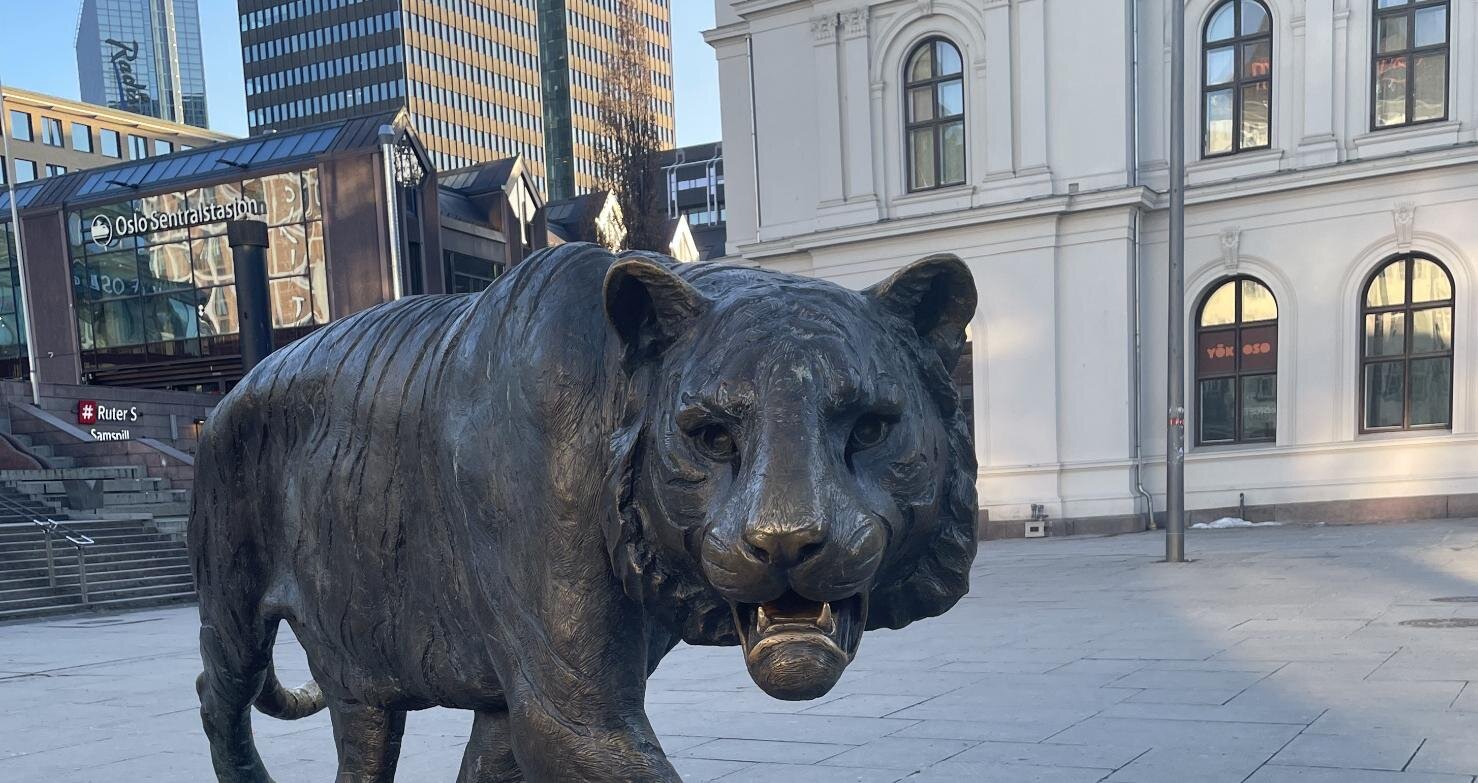
Interacting with the IBA staff and local PhD students also provided a valuable opportunity to engage with different backgrounds and perspectives. In particular, the PhD group was multinational, with many members from countries where English is not the first language. For members from diverse backgrounds, English was treated as a common language and using it as a language rooted in daily life was a fresh experience for me as well. During my stay, I went on cabin trips with the PhD students and attended their seminars, whilst also travelling independently to cities such as Oslo and Tromsø. With so many experiences--such as the fjords, Art Nouveau architecture, the Northern Lights and the local art scene--that can only be had on the ground, this internship allowed me to spend an incredibly enriching time, far beyond just the research experience. The people of Norway were all very kind, and I received tremendous support in both my research and daily life. I would highly recommend this internship to anyone wishing to take on the challenge of conducting research abroad.
Finally, I would like to express my gratitude to Hirano-san and Fukushima-san of METIS, along with everyone else who provided strong support with various procedures such as travel and accommodation, to Kino-sensei and everyone involved in the wise program, and to Professors Snorre and Lars, who guided my research on site.


IGARASHI, 1st year student, Course of Applied Marine Environmental Studies