
OUR OQEANOUS STUDENTS
- HOME
- OUR OQEANOUS STUDENTS
- IJP
- IJP Report (TUMSAT October 2025 - March 2026)
International Joint Program
IJP Report (TUMSAT October 2025 - March 2026)
2026.05.26
Graduate School of Kasetsart University
Course of Fisheries Science
Second Year of Master's Program
P. P.
[Motivation for applying]
I have always been interested in algae as a rich source of bioactive compounds such as pigments, polysaccharides, and secondary metabolites that could be useful in food science, nutraceuticals, and medicine. As a second-year Master's student in Fisheries Science at Kasetsart University, I wanted to develop my knowledge in phycology and explore how these compounds can be studied and applied in a more advanced research setting. Beyond the science, I was motivated by the chance to work and learn alongside researchers and students from Japan and other countries. I hoped to gain new perspectives, build international connections, and bring back skills and ideas that would strengthen my research at Kasetsart University. But the OQEANOUS Plus IJP offered exactly what I was looking for strong academics, hands on research experience, and the opportunity to grow both scientifically and personally.
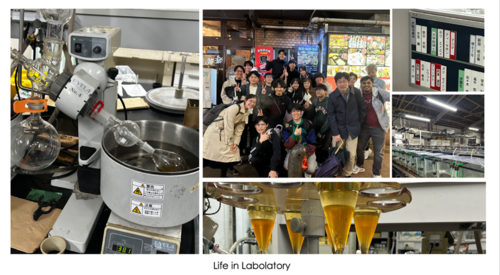
[Life in Laboratory]
During my time at TUMSAT, I worked in the Feed Technology Laboratory. This was a great match for my research interests, as the lab focuses on developing aquatic feeds using functional ingredients including algal biomass and its bioactive compounds. Being in this environment allowed me to apply and expand the knowledge I had built during my studies in Thailand. One thing that impressed me about the lab culture at TUMSAT was how seriously everyone took accuracy and careful methodology. Lab meetings were open discussions where all members including students were encouraged to share ideas, question results, and suggest improvements. This kind of environment helped me become more confident in presenting my work and more critical in evaluating it. Working with Japanese researchers and other international students also showed me different ways to approach problems. Even when communication was sometimes a challenge due to language differences, we always found ways to collaborate effectively. I leave the lab with new skills, a stronger scientific mindset, and a deep respect for the research culture at TUMSAT.
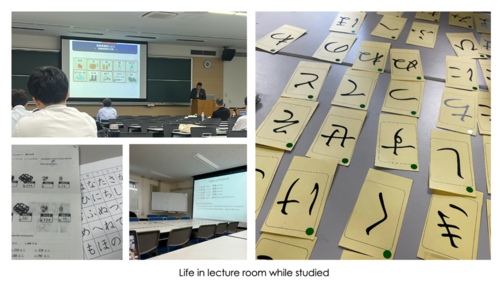
[Classes]
The courses I took at TUMSAT were well-suited to my research background and helped me grow in several important areas. Over the six months, I studied five subjects, each contributing something different to my understanding of marine and food science. Aquatic Feed Technology gave me a solid foundation in how feeds are formulated for marine species. I learned about the nutritional needs of aquatic animals, the role of different feed additives. Applied Phycology on Algal Function was the most directly related to my research. The course covered algal physiology, how bioactive compounds are produced, and methods for evaluating their antioxidant, antimicrobial, and anti-inflammatory properties. Analytical Chemistry of Biomolecules taught me advanced techniques for extracting and analyzing complex molecules. Food System Analysis helped me think about food products, functional foods, and nutraceutical industries. This broader perspective was new to me and changed the way I think about the real world impact of my research. Ecosystem Dynamics gave me a better understanding of the role in ocean ecosystems. It reminded me that the organisms I study are part of a much larger natural system, and that sustainable practices are essential.
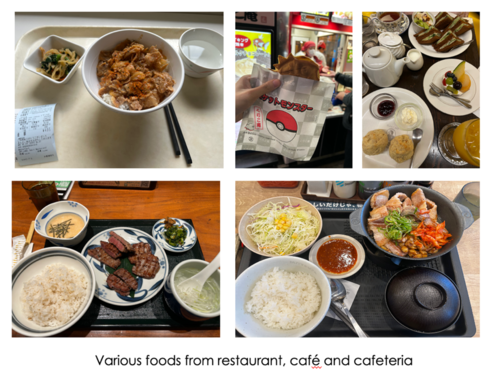
[Dormitory life & Daily meal]
I stayed in the student dormitory near the TUMSAT campus throughout my six months in Tokyo. It was a simple and comfortable place that quickly felt like home. My routine was fairly regular. I would prepare for the day each morning before heading to the lab or class, and in the evenings I often spent time in there. Cooking became a fun way to express myself. For meals, I had many options. The university cafeteria offered affordable Japanese set meals that were filling and nutritious a convenient choice on busy days. Japanese convenience stores surprised me with how good their ready-made food was, and I relied on them more than I expected. Adapting to Japanese food was not difficult. The food is generally fresh, well-prepared, and varied. I did miss Thai food sometimes, but Tokyo has many Thai restaurants, so it was easy to find a taste of home when I needed it. I really enjoyed the food experience in Tokyo it was one of the simple but memorable pleasures of living there.
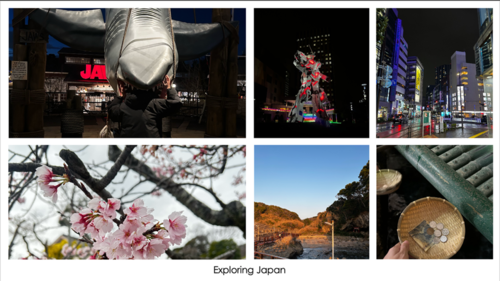
[Traveling]
One of the best parts of spending six months in Japan was having the chance to travel and explore beyond Tokyo. Whenever I had free time on weekends, I tried to visit new places and experience as much of the country as possible. Within Tokyo, I visited many different neighborhoods, each with its own character. Asakusa had a traditional, historic feel with its famous temple and old streets. Shibuya and Akihabara were exciting and modern. Yanaka was quieter and felt like a glimpse of older Tokyo. The city never felt the same from one area to the next, and I enjoyed discovering these different sides of it. Outside Tokyo, I traveled to Kyoto and Nara, which were highlights of my time in Japan. Kyoto's temples, traditional architecture, and peaceful gardens were beautiful and left a strong impression on me. In Nara, I enjoyed walking through the park among the deer and visiting the large wooden temple. I also went to Hakone, where I saw Mount Fuji on a clear day and tried an onsen for the first time a truly relaxing experience. I also visited some coastal areas, which felt especially meaningful given my marine science background. Seeing Japan's coastline and understanding how closely marine science is tied to Japanese culture and economy was inspiring. Traveling in Japan was easy and enjoyable thanks to the efficient train system and the helpfulness of local people. Every trip gave me new energy and reminded me how much there is to learn from experiencing life in different places.
[Building Friendship]
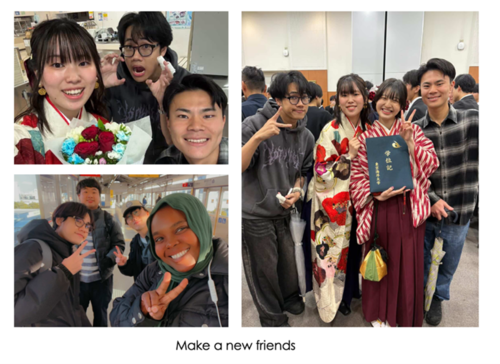
One of the most valuable things I gained from the IJP program was the friendships I made with Japanese students and other international participants. These connections grew naturally through shared work, shared meals, and shared experiences in daily life. My Japanese Friends were kind and patient, and they made me feel welcome from the very beginning. Even when there were language barriers, we found ways to communicate and support each other. I also had the chance to meet many international students and researchers at university events and social gatherings. These encounters showed me just how global the scientific community is, and how much we can learn from one another when we take the time to connect.
[A Little message for next participations]
If you are thinking about joining the OQEANOUS Plus IJP, my honest advice is "go for it". This program will challenge you, but it will also reward you in ways you might not expect. There will be moments when things feel difficult adjusting to a new language, following unfamiliar environment, or simply managing daily life in a foreign country. These challenges are normal. Try to see them as opportunities to grow rather than problems to avoid. Make the effort to build friendships early. The people you meet in the lab, in your dormitory, and at university events can become lifelong friends and professional contacts. Take your studies and research seriously, but also enjoy being in Japan. Visit places, try new foods, and take time to experience life outside the university. Some of the most meaningful lessons I learned during this program happened outside the classroom. Finally, trust yourself and the process. You may feel uncertain at first, but things will fall into place. By the end of your stay, you will look back and realize how much you have grown as a person.
I wish you all the best. Tokyo and TUMSAT are waiting for you.
