
OUR OQEANOUS STUDENTS
- HOME
- OUR OQEANOUS STUDENTS
- DDP
- DDP Report (TUMSAT Oct 2023 - Sep 2024)
Double Degree Program
DDP Report (TUMSAT Oct 2023 - Sep 2024)
2024.12.24
Kasetsart University (Kingdom of Thailand)
Graduate School of Kasetsart University
Course of Fishery Science and Technology
First Year of Master's Program
K. S.
【Coursework and Research activities】
Coursework
During my one year at TUMSAT, I studied subjects related to my research, such as pharmacology and preventive medicine in food, food functional chemistry, and food processing. Each subject had advanced, up-to-date content and practical applications. The learning was also divided into weekly classroom sessions until the end of the semester, a two-week simultaneous course, or a more hands-on learning approach, depending on the content and a teacher for each subject. Furthermore, I took Japanese language courses for two semesters. Starting from having no knowledge of the language, I progressed to a level where I could use it in daily life.
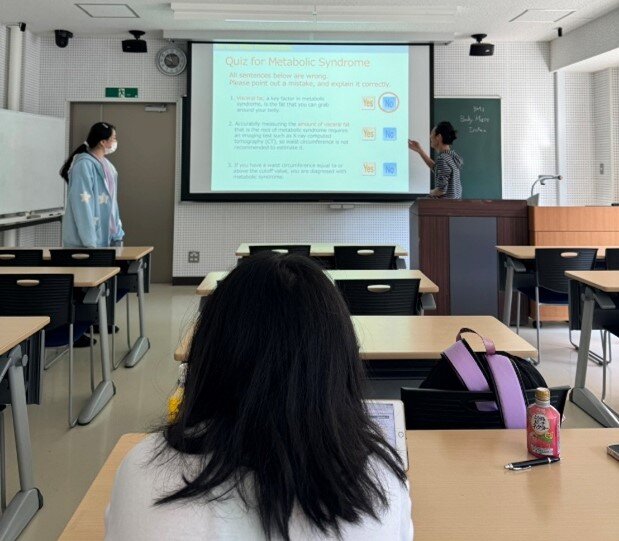 Fig. 1 Coursework
Research activities
During my studies at the Tokyo University of Marine Science and Technology (TUMSAT), I've had the opportunity to learn new things that I can apply to my research, including learning how to analyze new compounds from natural marine remains and studying the benefits and effects of new compounds by examining them in living cells and laboratory mice. After doing the experiment on research, we must record the experimental results and report the progress of our research every two weeks with my professor and students.
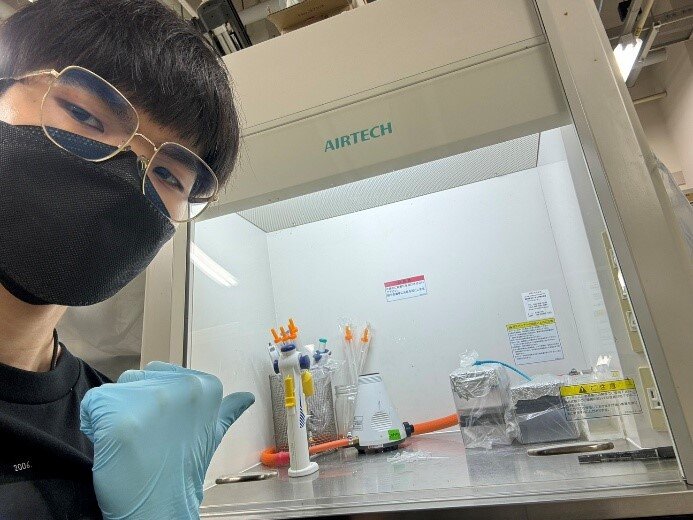 Fig. 2 Experiment at laboratory
【Campus life】
My daily life at university consists of going to my lab every day, except for some Saturdays and Sundays. Typically, I work on my research from 10 a.m. to 8 p.m. before returning to my dormitory. On days I have classes, I attend every session. After class, I go back to work on my research. Regarding food, I usually buy bread and coffee from a convenience store for breakfast and cook my own lunch and dinner. If I have time, I'll go shopping for ingredients or groceries around the university.
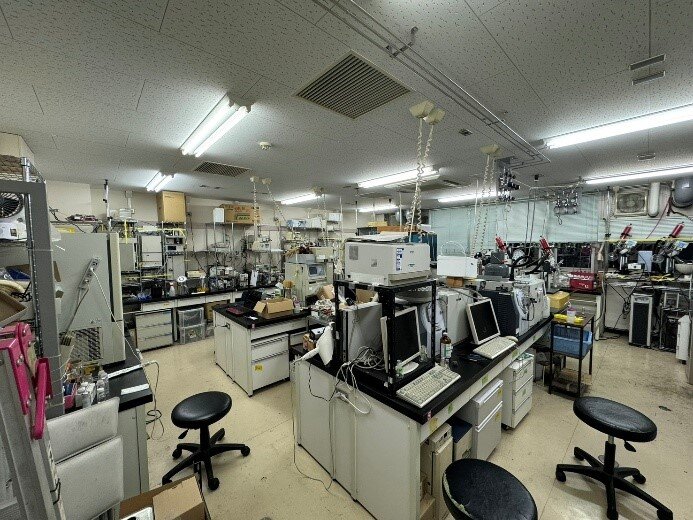 Fig. 3 Laboratory room
【Life in Japan】
In the first few weeks of my life in Japan, apart from studying and researching, involved spending Saturdays and Sundays exploring Tokyo for shopping and eating. After that, I rarely went out because my research was the focus. I did manage to do some sightseeing and shopping again in my final month before returning to Japan. Furthermore, living in Japan, where many Japanese people don't speak English fluently, presented a significant language barrier. Transportation in Japan relies heavily on trains and walking, as people walk very quickly. Finally, Japanese people are incredibly punctual, whether at school, work, or on the train. I had to adapt to all these aspects of the Japanese environment.
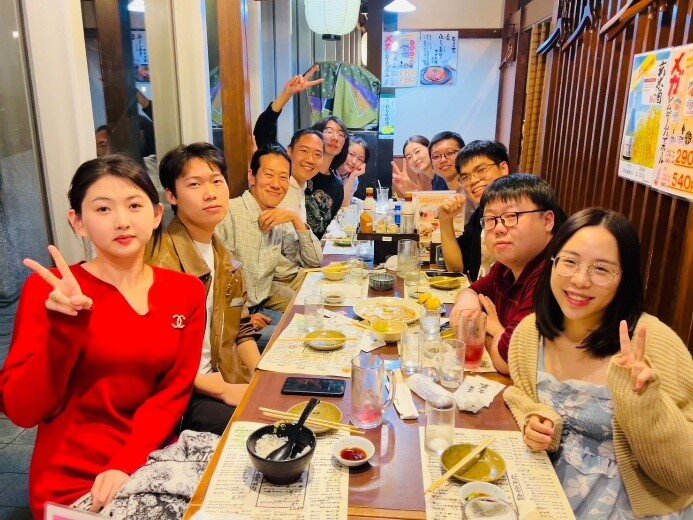 Fig. 4 Annual celebration party
【Personal growth】
After returning to my country, I noticed a significant change in myself. Before I left, I was slow and often late for work and school. After returning, I became much more enthusiastic and punctual. Furthermore, I can now cook a wider variety of dishes.
【For future students】
Essentials for living in Japan include: 1. Basic Japanese language skills, crucial for daily life in Japan. 2. Learning how to use the train system, which is very important for transportation. Understanding these two things in advance will make life much easier.
