






CTEX Participation 2026 April-2026 August
Master Student, Biology
Norwegian University of Science and Technology (NTNU),Norway
V.G.
I am Norwegian master student and spent the spring semester of 2026(April to august) at TUMSAT. I recently came back to Norway and the following report is about my experiences and thoughts on my exchange to TUMSAT.
NTNU has plenty of exchange deals with universities around the world and several with japan. Since my interests are related to aquaculture, I quickly realized that TUMSAT had the most to offer. I also learned that TUMSAT and my institute at NTNU have strong connections and collaborate on different projects. In autumn of 2025, I even had the pleasure of personally meeting coordinators from the international office and professors at TUMSAT in Norway. As I early in the process gained a lot of promising insights of TUMSAT, it felt like a natural choice to participate in the METIS program. Conveniently, the communication with the international affair section at TUMSAT was clear and helpful, which made the pre-planning process easy and straightforward.
The METIS agreement includes a digital intensive course consisting of 2-hour seminars over 10 days and its worth 2 ETCs. This year topic was about how AI is transforming marine industry and science. Professors from different institutions, such as NTNU and TUMSAT presented their field and how AI is related to it. The seminars were very interesting, and the last seminar consisted of a 5-minute presentation from each student. It was overall an enjoyable and insightful experience to participate in the seminars. Since it was digital it made it possible for me to easily attend the seminars even though my family was visiting me in Tokyo at the time.
Tokyo is a completely different environment than my study town Trondheim. The city is enormous and many new cultural customs to adapt to. What really helped is when I landed on April 6th, I met my tutor and fellow student Mr.Ikemoto at the airport. He helped me with getting settled into the dormitory and sorting out all the documents at the ward -and bank- office. Without the tutor system I would be clueless with all these early procedures and other issues that arose throughout my stay.
The dormitory is a completely new building finished just before my arrival, so I was the first tenant in my room. It was modern, well-organized, clean and located on campus which itself is within a short walk from Shinagawa station. I lived on the 8th floor on 13 square meters where I had everything I needed and paid around 67000 yen per month.
As opposed to Norway, master students in Japan belong to a laboratory and work on their research project alongside the advisor and other students. They also seem to have a closer relationship and collaboration with the advisors / professors. I was gratefully allowed to be a part of professor Kigen Takahashi's and assistant professor Yusa Nakamura's seafood laboratory, alongside four other Japanese students.
The work culture in Japan is very different from Norway, and the students and professors spend impressively much time at the university. I ended up taking only courses because I did not have a specific research project to work on. The overall workload for each course was manageable and required a lot of self-studies. Therefore, in my situation, the workload felt less intense than a semester at NTNU. The courses were in aquaculture, food science and microbiology and were quite interesting. In a normal school day, I would work on my courses, attend lectures or participate in laboratory work. It is much more expected that you meet in person at the laboratory every workday. Which was a new experience for me that I found it a bit challenging, but it worked out fine with the proper communication with the lab group.
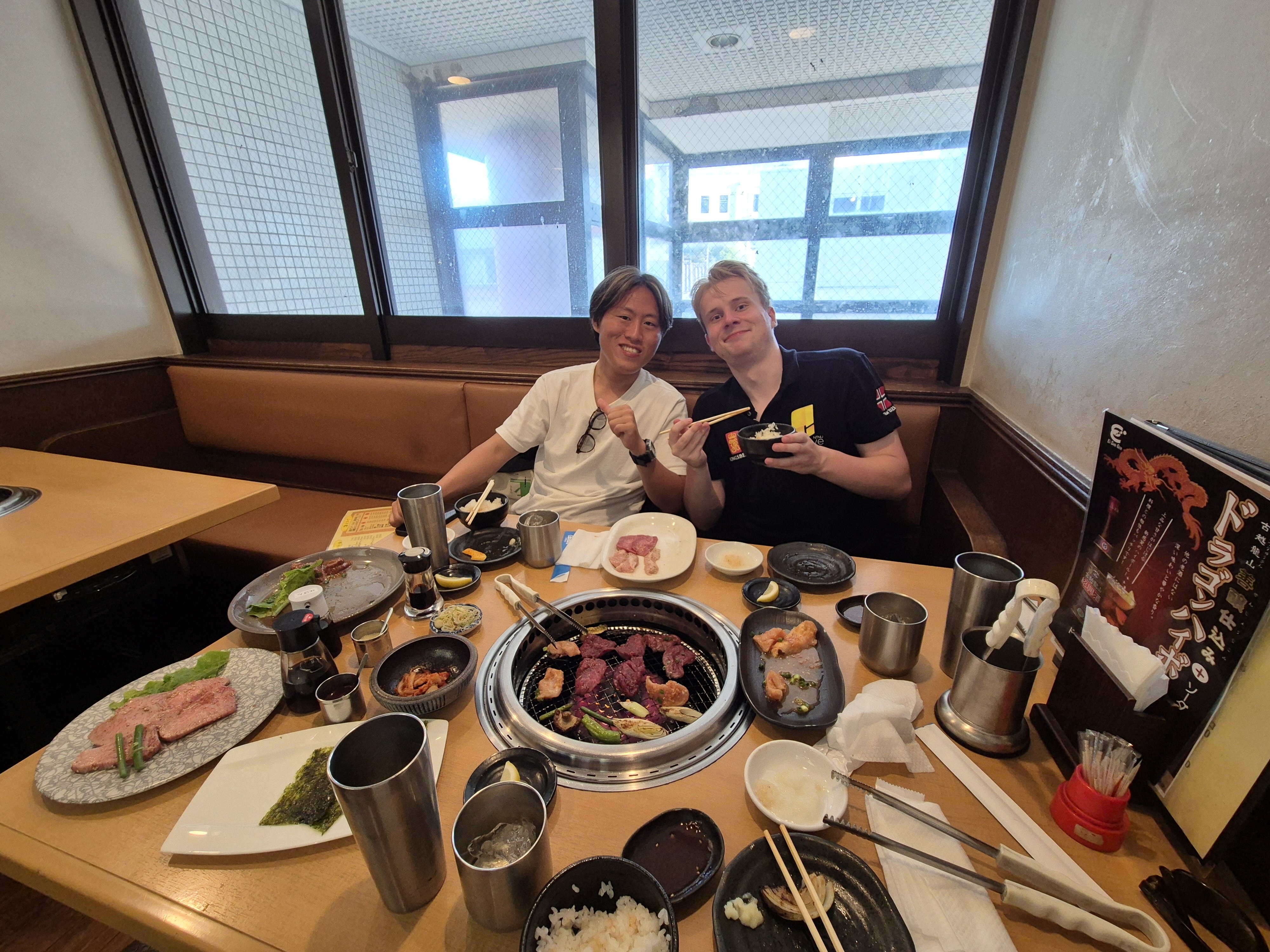
I got an impression that the offices of the different laboratories in the university is a living space as much as a working space. It was not uncommon that the lab-group would bring forward the rice cooker or the portable induction cooker to make some lunch or dinner. Or cutting up some delicious yellow watermelon or make sashimi of the horse mackerel that arrived to be used in an experiment. My taste buds have never been exposed to so many new and different textures and flavours. Sometimes we brought chairs and tables and had dinner parties in the office space. The atmosphere in the lab was cheerful and vibrant with a lot sharing of food and snacks.
In my first few days, the group organized a welcoming dinner and a full day of activities. In the morning we got ingredients for dinner at Tsukiji fish market, followed by a visit to Ajinomoto factory. In the evening we made sushi from delicious ingredients, and I even got to try sea cucumber (speaking of eating new things). Mr.Takahashi often invited me and / or the group to go out for dinner or lunch and other activities. I got to experience the local favourite ramen - and sushi places and see freshly caught tuna up close in Toyosu fish market. Mr.Takahashi and Ms.Nakamura also organized a company trip to visit an aquaculture company in Aichi prefecture, with sightseeing of the area and a trip to Nagoya. Which is one of my top experiences throughout my exchange. Another memorable event was when Mr.Takahashi organized for the group to experience the Shinagawa festival and going out to eat dinner after. Because of his eagerness to invite me out to eat and experience other things in Tokyo, as well as the feeling that the whole lab-group was interested in having me there, I felt truly warmly welcomed.
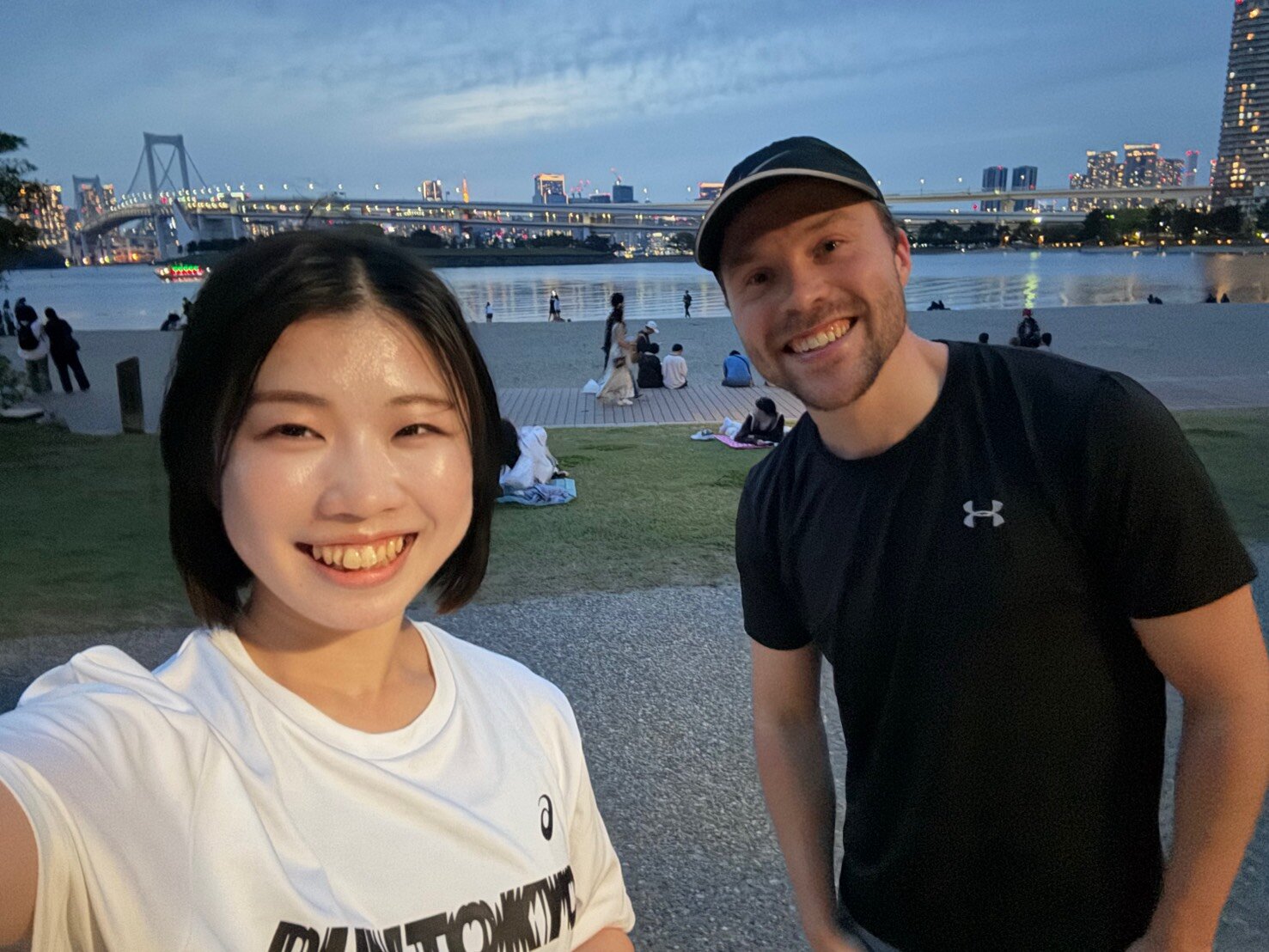
Running with a view of Tokyo rainbow Bridge!
The life I had in Tokyo was so different from Norway and fells quite distant. When looking back I can't be anything but grateful for this opportunity. Because of the METIS agreement I got to experience Tokyo and Japan in depth. Meet new exciting people and make friends on the other side of the globe. In terms of activities and things to explore, Japan has so much to offer, and it defiantly requires me to go back to cross more thing of the bucket list. Going to Japan and experiencing the culture up close was very interesting and made me reflect on the differences to Norway and Europe. It also puts you in a spot where it requires you to adapt to the very different culture and to solve issues along the way. Which allows for personal development it is hard to gain otherwise. I think programmes like the METIS agreement is important in maintaining the close collaboration Norway have with Japan and between other countries. In an academic sense, what I gained the most is a different perspective on aquaculture and seafood in a global sense. As well as a deep insight of the close knight collaboration between Norway and Japan and the common interests that we share, related to seafood and the ocean. I think this perspective is very valuable for my future career and hard to achieve without going on an exchange to Japan. Thanks for having me TUMSAT and to the seafood science lab!